


Good Vision Begins With a Healthy Retina
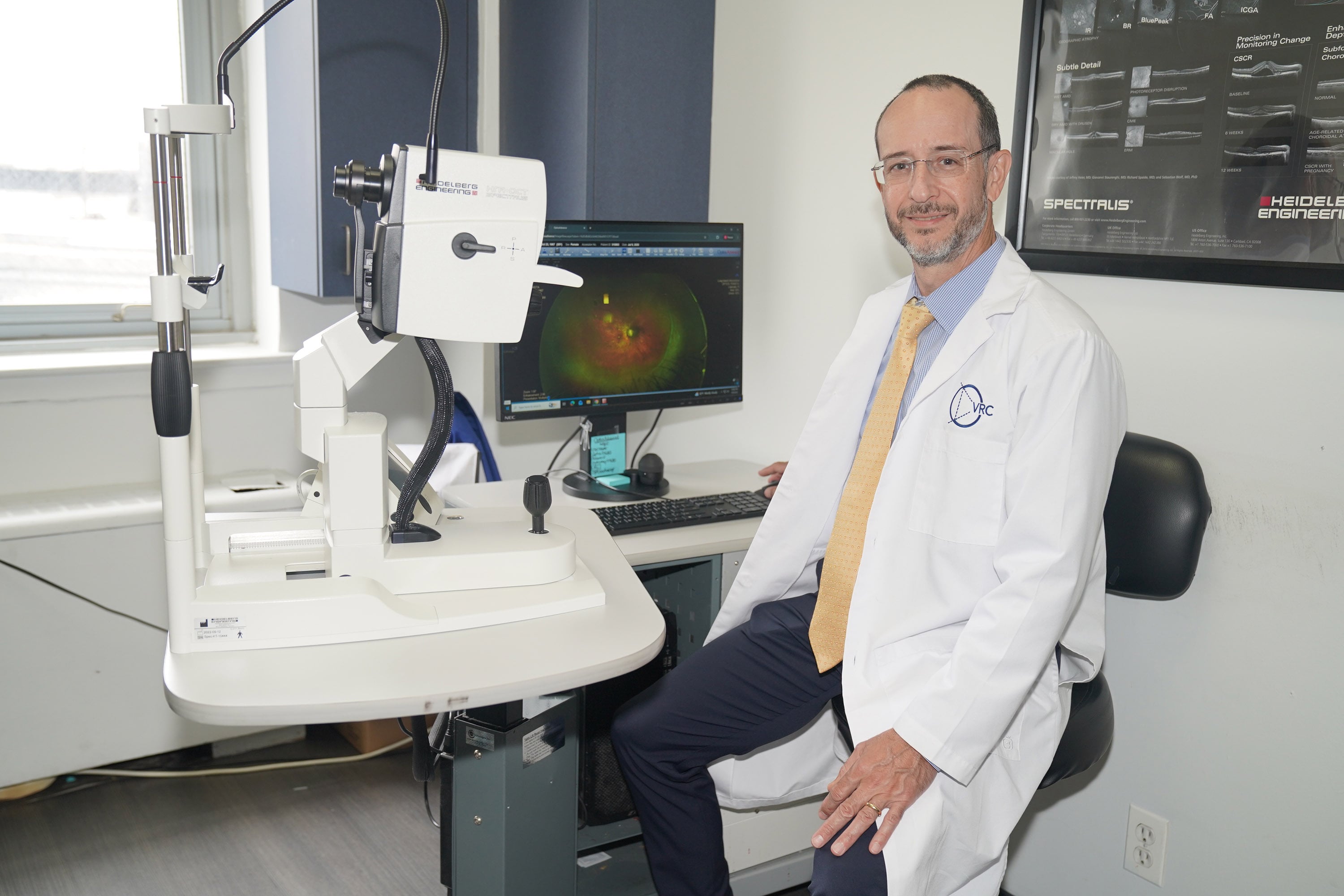
Vitreoretinal Consultants of New York’s Dr. Juan Romero recently spoke with the Queens edition of El Especialito, a Spanish-language weekly serving Hispanic communities throughout the New York area. In the interview, Dr. Romero shares his path to becoming a retina specialist and discusses common conditions affecting the retina and macula, advances in diagnosis and treatment, and steps people can take to protect their vision.
Read the English translation of the interview below.
A Journey Guided by Curiosity and Research
The retina plays a fundamental role in our ability to see clearly, yet some retinal diseases can progress without obvious symptoms in their early stages. That is why prevention, regular eye exams, and early detection are essential to protecting vision.
To learn more about the importance of caring for this part of the eye, we spoke with Dr. Juan Romero, a retina specialist, who shares his professional journey, explains the conditions that most commonly affect the macula, and discusses advances in diagnosis and treatment, as well as recommendations for maintaining good eye health.
What inspired you to specialize in the treatment of retinal and macular diseases?
I graduated as a medical doctor and surgeon from Pontificia Universidad Javeriana in Bogotá, Colombia. In 1996, I came to the United States with the goal of specializing in ophthalmology. I conducted research in retinal diagnostic imaging at New York Eye & Ear Infirmary, where I completed my residency, and later completed a two-year fellowship in retina at Kresge Eye Institute in Michigan.
After completing my training, I returned to New York and worked for three years as a retina professor at New York Eye & Ear Infirmary. In 2007, I joined Vitreo-Retinal Consultants of New York, where I continue to practice today.
My interest in ophthalmology began when I was a child, inspired by my father, who was also an ophthalmologist in Colombia. I had the opportunity to work with him conducting retinal photography studies, and that experience sparked my fascination with this part of the eye.
Many people compare the eye to a camera. If we make that comparison, the retina would be the film that captures each image. There, what we see is transformed into signals that travel to the brain and allow us to interpret the world around us. Understanding that process sparked a passion that has continued to grow throughout the years.
What are the most common diseases of the macula that you see, and what symptoms should not be ignored?
The macula is the central region of the retina and is responsible for our sharpest vision, which is necessary for reading, recognizing faces, appreciating colors, and performing activities that require precision.
Among the conditions that most frequently affect this area are diabetic macular edema and age-related macular degeneration. Both can seriously compromise vision if they are not detected and treated in time.
Some symptoms that should not be ignored include:
- Blurred vision
- Loss of central vision
- Straight lines beginning to appear distorted
- Blind spots or areas where part of the image is missing
- Difficulty distinguishing colors
- Floaters or flashes of light
What advances in technology and treatment are making a difference for patients?
Advances in the diagnosis and treatment of retinal diseases have been extraordinary. Today, we have highly precise imaging technologies that allow us to examine the different layers of the retina, evaluate its structure, and analyze blood circulation, helping us detect abnormalities even before patients notice significant changes in their vision.
In terms of treatment, we now have a variety of tools, including laser therapy, infrared light, molecular- and gene-targeted biological therapies, as well as surgical procedures that are increasingly precise and less invasive. These advances have significantly improved our ability to preserve vision.
What advice would you give members of our community to protect their vision?
The first step is to take care of your overall health. Conditions such as diabetes, high blood pressure, and elevated cholesterol can also affect the retina.
It is also important to protect your eyes during sports or work activities that may pose a risk of injury and to wear glasses that provide ultraviolet protection when exposed to sunlight.
However, the best tool remains prevention. I recommend having a comprehensive eye examination at least once a year. If any retinal abnormality is detected during the evaluation, it is essential to consult a specialist as soon as possible.
What would you like our readers to remember about the importance of taking care of their vision?
The retina is made up of highly specialized tissue, and many of its cells do not regenerate once they are damaged. That is why prevention, regular checkups, and timely treatment are essential to maintaining good vision throughout life.
If you live with diabetes, are over 50, or have noticed changes in your vision, do not wait for your symptoms to worsen. A specialized retinal evaluation can be an important first step toward protecting your vision for many years to come.